IBS
An IBS food diary app that counts the good meals too
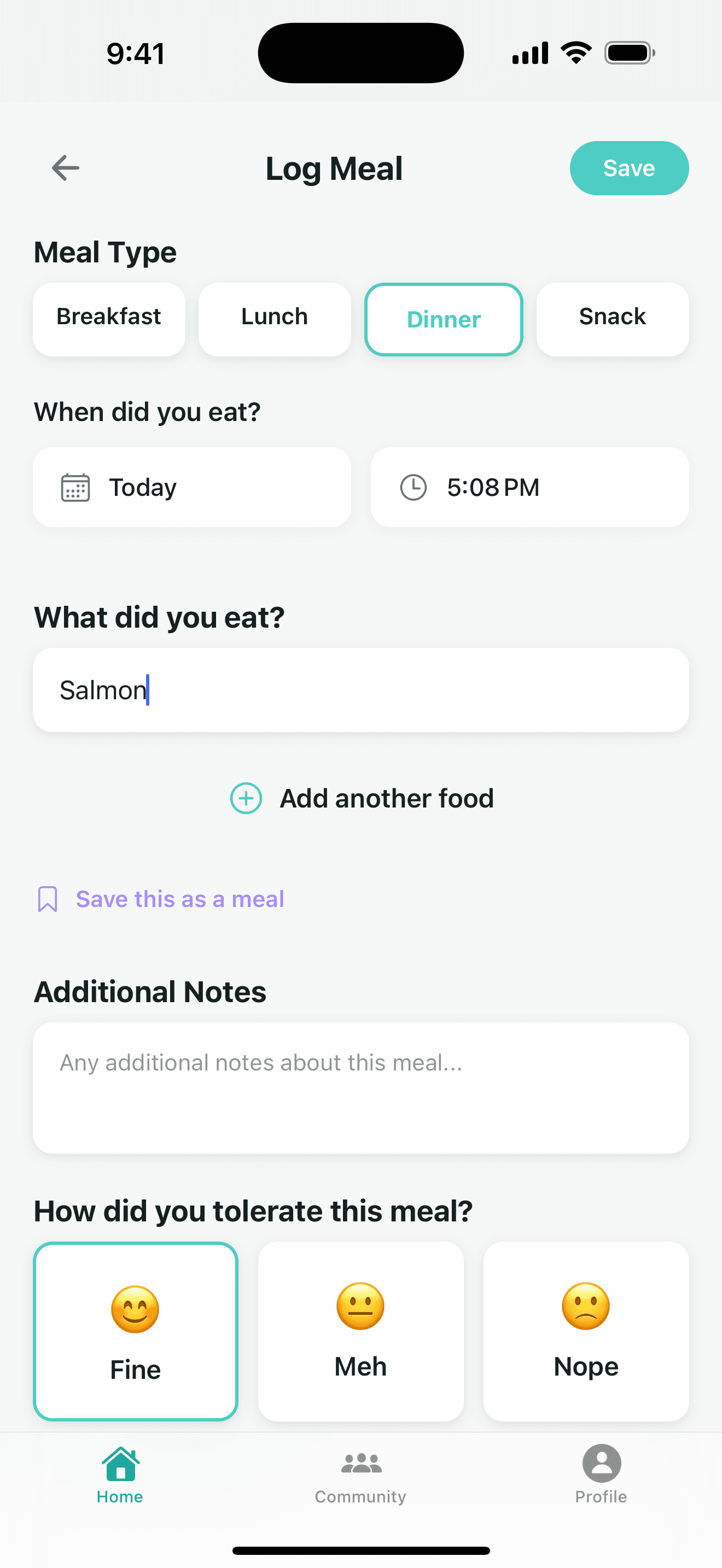
Most IBS food diaries only get opened on bad days, so they end up blaming whatever you eat most often. Crohn's Food Tracker logs every meal in two taps, rates how it sat, and only calls a food a likely trigger once your own data backs it up.
- Log a meal in two taps and rate it fine, meh or nope.
- Bloating, pain, urgency, diarrhea, constipation and more, each with severity and time.
- Stool form on the Bristol scale — useful whether your IBS leans loose, hard or mixed.
- Foods ranked by how often they preceded symptoms, with the “n of m meals” count beside each.
- A one-page report for your doctor or dietitian.
Free to start. iPhone, iPad and Android; one account works on both.
Why an IBS food diary needs the tolerated meals
If you drink coffee every morning, coffee will be on every bad day’s list. That doesn’t make it a trigger; it makes it common. The only way to separate the two is to record the meals that went fine as faithfully as the ones that didn’t, and then compare. That is the core of how this app works, and of the method in IBS food diary: how to find your trigger foods.
Triggers people with IBS commonly report include high-FODMAP foods, fatty meals, caffeine, alcohol and large portions, but they vary a lot from person to person (NIDDK). A diary turns that general list into your list.
Using it alongside a low-FODMAP diet
A low-FODMAP diet is a structured, time-limited approach with an elimination phase and a reintroduction phase, ideally guided by a dietitian (Monash University). The reintroduction phase is where a diary earns its keep: one food group at a time, with symptoms logged for the days after. The app doesn’t tell you which FODMAPs to cut; it keeps the record that shows what happened when you brought each one back. More in Low-FODMAP and IBD: when it helps and when it doesn’t.
Is it only for Crohn's?
No. The name comes from where the app started, in 2017, but the logging, the trigger ranking and the reports work the same for IBS, ulcerative colitis and Crohn’s. You can set your condition in the app and change it later.
Before you rely on any diary
IBS is diagnosed by a clinician, usually after other causes have been ruled out (NHS). Blood in your stool, unexplained weight loss, symptoms that wake you at night, or a lasting change in bowel habit later in life are reasons to see a doctor rather than keep tracking. See also how to keep a food and symptom journal your doctor will actually use.
Quick answers
- What is the best way to keep an IBS food diary?
- Log every meal close to when you eat it, including the ones that sat fine; log symptoms separately with a time and severity; keep going for at least two to four weeks; and look for foods that are followed by symptoms a high share of the times you eat them, not just foods that appear on bad days.
- Can an app tell me what my IBS triggers are?
- It can show which foods were most often followed by symptoms in your own records, and how confident that pattern is. That is a lead to test with your doctor or dietitian, not a diagnosis.
- Does this work with a low-FODMAP diet?
- Yes. The app doesn't prescribe a diet, but it is well suited to the reintroduction phase, when you bring foods back one at a time and need a clear record of what happened afterwards.
- Is the IBS food diary app free?
- Logging is free and your first comprehensive report is free. An optional Premium subscription adds unlimited reports and deeper trigger analysis.
Guides to read next
Crohn's Food Tracker is educational support and a self-tracking tool. It is not a medical device and does not provide medical advice, diagnosis or treatment. Always talk to your gastroenterologist or care team before changing your diet, medication or treatment. If you have severe pain, persistent bleeding, a high fever or signs of obstruction, seek urgent care.