Ulcerative colitis
A food tracker built for ulcerative colitis
Log what you eat in two taps, rate how it sat, and record the symptoms UC is actually measured by — frequency, blood, urgency, night waking. After a week or two, see which foods most often came before a bad day, and take a one-page summary to your GI.
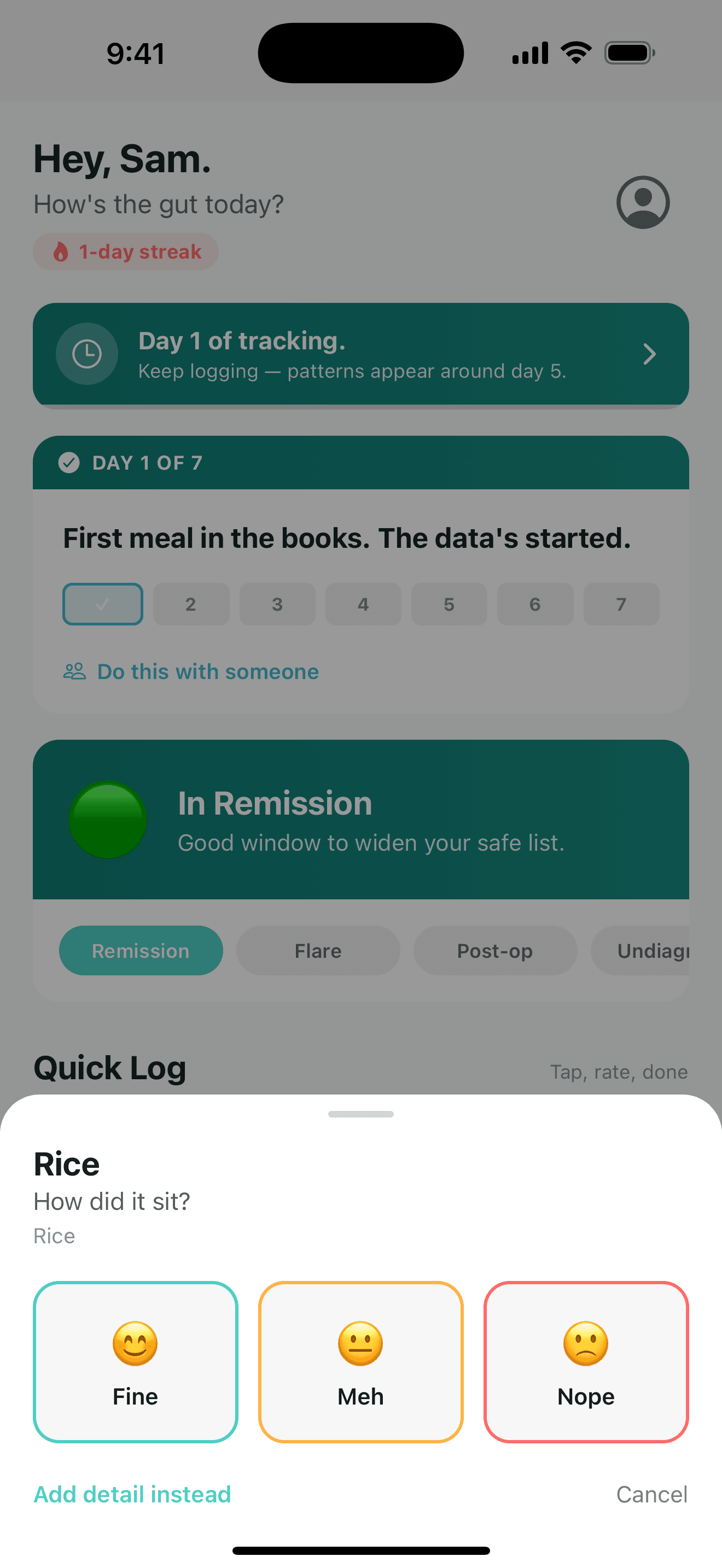
- Two-tap meal logging: pick the food, tap fine, meh or nope.
- Symptoms with severity and time, including blood, urgency and night waking.
- Stool form on the Bristol scale, so a drift toward loose shows up as a trend.
- Likely trigger foods ranked by how often they preceded symptoms, with the counts shown.
- A one-page PDF for any date range to hand your gastroenterologist.
Free to start. iPhone, iPad and Android; one account works on both.
Why UC needs a different kind of food diary
Ulcerative colitis is assessed in clinic mostly on things you can count: bowel movements by day and by night, whether there was blood, how urgent it was. A food diary that only records meals misses half of that, and a symptom diary that ignores meals can’t tell you whether food is part of your picture at all.
Research hasn’t found that specific foods cause or worsen UC (NIDDK), but many people notice that particular foods make symptoms harder to live with, especially during a flare. The only way to find yours is to log meals and symptoms side by side and look at the pairing over weeks, not days.
What the app records for UC
- Meals and drinks, each with a fine / meh / nope rating at the time you eat.
- Symptoms such as abdominal pain, urgency, diarrhea, blood in stool, bloating, fatigue and night waking, each rated mild, moderate or severe with a time.
- Stool form on the Bristol scale (types 1 to 7).
- “Felt fine today” as its own entry, because good days are evidence too.
- Medicines as you take them, plus hydration and weight.
The same account works if your diagnosis is Crohn’s or IBS, or changes later. See Crohn’s vs ulcerative colitis: the practical differences for tracking.
How “likely trigger” is worked out
Every meal containing a food is one observation, including the meals that sat fine. A food climbs the list as the share of its meals followed by symptoms rises, and small samples are held back: two bad mornings after coffee read “Possibly”, not “Very likely”. Each food shows its count — “3 of 9 meals preceded symptoms” — so you and your GI can judge it. It is an association in your own data, a hypothesis to test with your care team, not a diagnosis.
Bringing it to your GI
Pick 7 days, 30 days or a custom range and the app builds a one-page PDF: symptom trend, severity by time of day, stool patterns, tolerated foods, likely aggravators with their counts, and medication history. Your first comprehensive report is free. For what to bring besides the report, see how to prepare for a gastroenterologist appointment.
Quick answers
- Is there a diet that treats ulcerative colitis?
- No diet has been shown to cure UC, and research has not found specific foods that cause or worsen it. Many people do find certain foods harder during a flare. Expert guidance suggests a varied, Mediterranean-style pattern is reasonable for most people with IBD, adjusted to what you tolerate — ideally with an IBD dietitian.
- What should I track if I have ulcerative colitis?
- Meals with how they sat, bowel movement frequency by day and night, blood, urgency, stool form on the Bristol scale, pain, night waking, medicines and anything unusual like illness or travel. Those map onto what gastroenterologists ask about.
- How long before the app shows likely triggers?
- Candidates can appear within about a week of consistent logging, but a food needs repeated, consistent observations before it is labelled more than "Possibly". Two to four weeks of logging gives a far more reliable picture.
- Is the colitis food tracker free?
- Logging is free, and your first comprehensive PDF report is free. An optional Premium subscription adds unlimited reports and deeper trigger analysis.
Guides to read next
Crohn's Food Tracker is educational support and a self-tracking tool. It is not a medical device and does not provide medical advice, diagnosis or treatment. Always talk to your gastroenterologist or care team before changing your diet, medication or treatment. If you have severe pain, persistent bleeding, a high fever or signs of obstruction, seek urgent care.