Bristol stool chart
A Bristol stool chart tracker that puts form next to food
Record each bowel movement's Bristol type in a couple of taps, alongside the meals and symptoms around it. Over a few weeks the drift — toward loose, toward hard, or back to normal — becomes a chart you can show your GI.
- Stool form on the Bristol scale, types 1 to 7.
- Blood, urgency and night waking logged as their own symptoms, with severity.
- Meals rated fine, meh or nope, so stool changes can be read against what you ate.
- Stool patterns included in the one-page PDF report.
- Works for Crohn's, ulcerative colitis and IBS.
Free to start. iPhone, iPad and Android; one account works on both.
The chart, in plain words
The Bristol Stool Form Scale sorts stool into seven types by shape and consistency. It was described by researchers in Bristol as a guide to how quickly stool moves through the gut (Lewis & Heaton, 1997), and it is now the shared vocabulary between patients, nurses and gastroenterologists.
| Type | Illustration | What it looks like | What it often suggests |
|---|---|---|---|
| 1 | Separate hard lumps, like nuts; hard to pass | Constipation — slow transit | |
| 2 | Sausage-shaped but lumpy | Constipation — slower than usual | |
| 3 | Like a sausage with cracks on the surface | Usually considered normal | |
| 4 | Smooth and soft, like a sausage or snake | Usually considered normal | |
| 5 | Soft blobs with clear-cut edges; passed easily | Towards loose | |
| 6 | Fluffy, mushy pieces with ragged edges | Loose — faster transit | |
| 7 | Watery, no solid pieces; entirely liquid | Diarrhea — fast transit |
The scale describes form only. Colour, blood and mucus are logged separately. For a type-by-type walk-through, including when a change is worth a call, read Bristol stool types 1 to 7: what each one means and when to worry.
Why track the type rather than describe it
“Looser than usual” means different things on different days. A number doesn’t. Logged consistently, stool type becomes a trend: a week sliding from 4 toward 6 and 7 is visible on a chart long before it is obvious in memory, and a return toward 3 and 4 is just as visible. That is the conversation your GI wants to have, and it’s why the type sits in the app next to the meals and symptoms around it rather than on its own.
What the app does with it
- Each bowel movement can be logged with its Bristol type and a time.
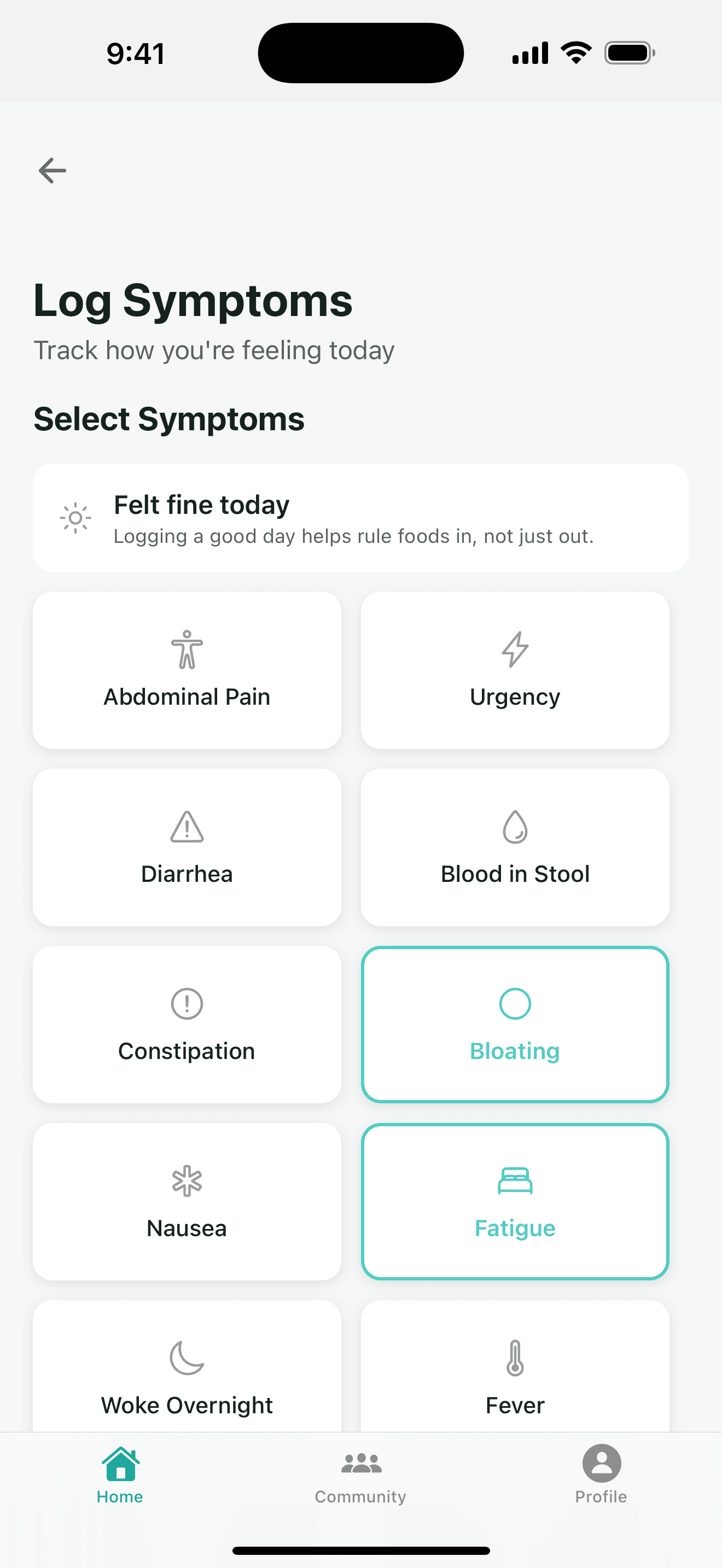
- Urgency, blood in stool, diarrhea, constipation and night waking are separate symptoms rated mild, moderate or severe.
- Meals are logged in two taps with a fine / meh / nope rating, and likely trigger foods are ranked with their counts.
- The PDF report for any date range includes stool patterns, so your GI sees the trend on one page.
When stool form is not a tracking question
Black or tarry stool, a lot of blood, watery diarrhea you can’t keep up with by drinking, or severe belly pain with a swollen abdomen and no stool or gas need same-day medical care. If you don’t have a diagnosis, new blood or a lasting change in bowel habit is a reason to see a doctor (NHS), not to start tracking at home.
Quick answers
- What is a normal Bristol stool type?
- Types 3 and 4 are usually considered normal, with type 4 often described as ideal. Types 1 and 2 suggest constipation and types 6 and 7 suggest diarrhea. What is normal for you, especially after bowel surgery, is worth asking your own team.
- How often should I log my stool type?
- Every bowel movement during a flare or a food test, if you can. In a stable period a daily "typical type" plus anything unusual is usually enough to keep the trend honest.
- Does the Bristol stool chart diagnose anything?
- No. It describes stool form only. It helps you and your clinician describe changes precisely; diagnosis needs a clinician and usually tests.
- Is the Bristol stool chart tracker free?
- Logging stool form, meals and symptoms is free, and your first comprehensive PDF report is free. An optional Premium subscription adds unlimited reports and deeper trigger analysis.
Guides to read next
Crohn's Food Tracker is educational support and a self-tracking tool. It is not a medical device and does not provide medical advice, diagnosis or treatment. Always talk to your gastroenterologist or care team before changing your diet, medication or treatment. If you have severe pain, persistent bleeding, a high fever or signs of obstruction, seek urgent care.